
Knee Pain on Stairs: Why It Can Start Changing Your Day
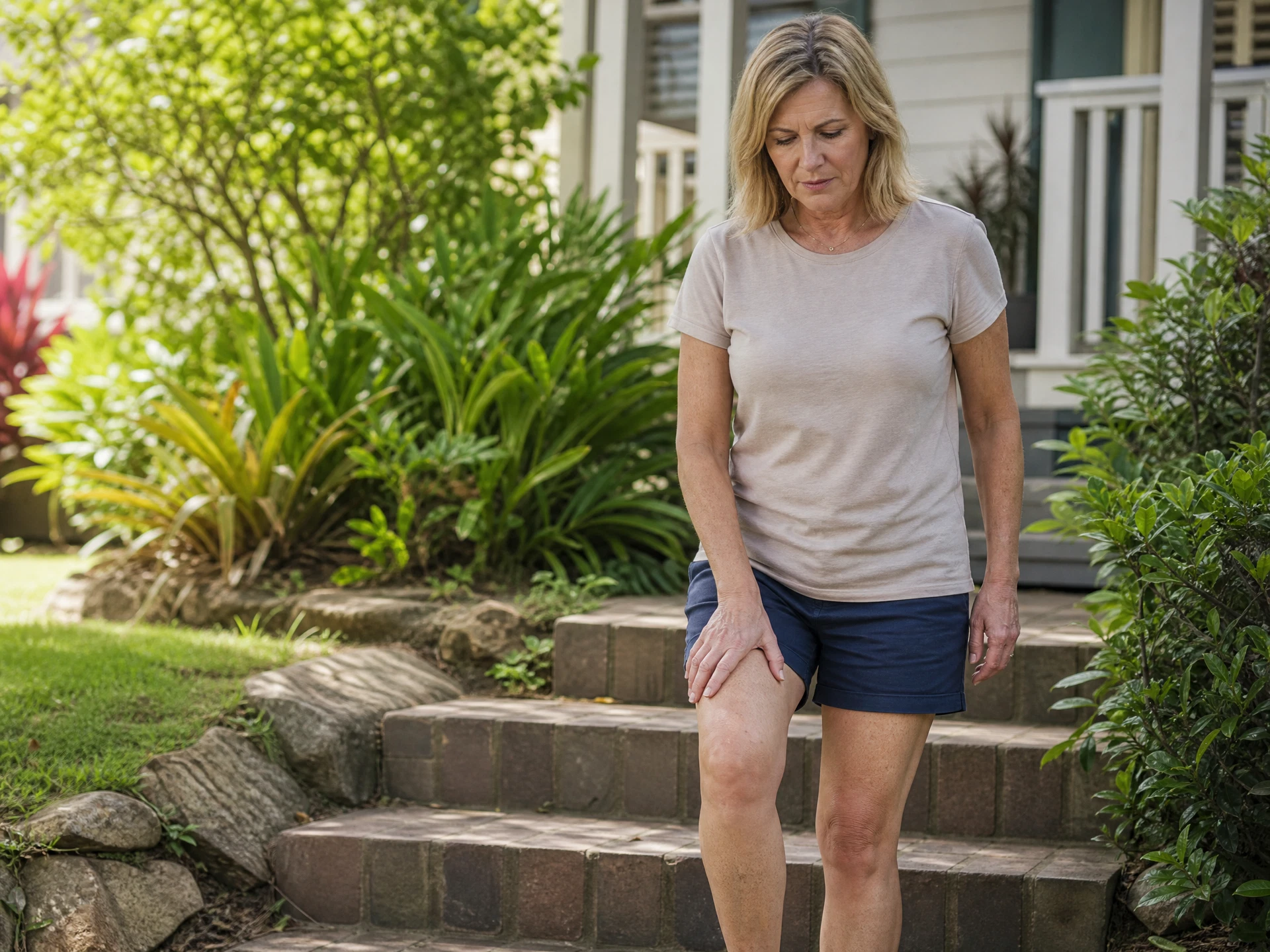
It might be the steps at home, the kerb outside the shops, or the stairs you have used every day for years. You put one foot down, feel a familiar twinge around the knee, and instinctively reach for the handrail. Nothing dramatic has happened, but stairs have started asking for more thought than they should.
That small hesitation can spread. You choose the lift. The dog’s walk gets shorter. You think twice before kneeling in the garden or sitting on the floor with the grandchildren because getting back up has become the part you plan around. It is understandable to wonder whether you should push through, rest completely, or accept that this is simply part of getting older.
It Is Rarely Just The Staircase
Going up or down stairs asks the knee, hip, ankle and surrounding muscles to share load while you control your body weight. When one part of that system is sore, stiff, recovering from an injury or simply not accustomed to the amount of activity you are asking of it, stairs can be where you notice it first.
Knee pain can have many possible causes. An injury, arthritis, changes in training or activity, and problems affecting the structures around the knee can all be relevant. The location of pain alone does not tell the whole story, so it is not helpful to diagnose yourself from a single symptom. Healthdirect Australia notes that knee pain can come on suddenly or gradually and may be related to an injury or a medical condition.
For some people, the issue is most noticeable after sitting for a long time. For others, it arrives after a weekend of activity that was more than their usual week asked of them. The foot, hip, lower back, balance and confidence in movement can also be worth considering. A useful conversation looks at what your knee needs to do in your life, not only the exact spot that feels uncomfortable.
When Knee Discomfort Starts Quietly Changing Your Choices
Most people do not stop doing the things they enjoy all at once. It is more often a series of small adjustments: choosing the flatter walking route, leaving the heavier pot where it is, avoiding the lower shelves at work, or saying no to an outing because you are not sure how the knee will feel tomorrow.
There can be frustration in that. You may have tried resting, changing shoes, a knee sleeve, anti-inflammatory medication or simply hoping it would settle after a quieter week. When none of those choices gives you a clear answer, it is easy to lose confidence in movement itself.
"The aim is not to make your knee the centre of your day. It is to understand what it needs to manage the life you want to keep living."
A Clear Picture Comes Before A Plan
If you choose to seek care, a thorough assessment may include the story of how symptoms began, which movements change them, your activity history and the things you have already tried. It may also look at relevant knee, hip, ankle and lower-back movement, strength, balance and how you manage everyday tasks such as walking, stairs, squatting or getting up from a chair.
The goal is not to assume there is one cause or one treatment approach. It is to understand what appears most relevant in your situation and whether chiropractic care, a different health professional, imaging or medical review should come first. Where appropriate, recommendations may include activity changes, mobility, strength and balance work, hands-on care and a gradual return to the tasks you value.
When Medical Assessment Should Come First
Some knee symptoms need more than a routine appointment. Healthdirect advises urgent medical assessment for a badly swollen or changed-shape knee, a red and hot knee with fever, major injury, severe pain, or an inability to put weight through the leg. A knee that locks, gives way or cannot move normally also deserves timely medical advice. If you are unsure, a GP, urgent-care service or Healthdirect can help you decide the right next step.
Five Calm Things You Can Consider Today
- Notice the pattern. Make a brief note of whether stairs, sitting, long walks, squatting or a particular activity changes the knee. This is useful information, not a test to pass.
- Change the dose before stopping everything. If a task is clearly aggravating, smaller bouts with a break may be more realistic than trying to do the whole job at once.
- Use the handrail. It is a practical way to share load and move with more confidence while you work out what is going on.
- Keep gentle movement in the week where comfortable. Healthdirect notes that exercise and strengthening may be helpful for some knee problems, but the right starting point depends on the cause and the person.
- Seek assessment if the pattern is persisting, worsening or changing what you do. You do not need to wait until your life has become much smaller.
Common Questions About Knee Pain On Stairs
Why does my knee hurt when going down stairs?
Stairs place different demands on the knee and surrounding muscles. There are several possible contributors, including injury and medical conditions, so an individual assessment is more useful than assuming one explanation.
Should I stop walking if my knee hurts?
Not always. The right approach depends on your symptoms, history and current capacity. It may be sensible to adjust distance, pace or terrain while seeking individual advice rather than stopping all activity without a plan.
Can other areas affect how my knee feels?
For some people, hip, ankle, foot and lower-back movement, strength and balance can be relevant to how they move. A careful assessment considers the movement task as a whole.
For independent Australian health information about knee pain and signs that need urgent attention, visit Healthdirect Australia. You can also explore our Knee Pain guide for a plain-English overview of what an individual assessment may consider.
Ready To Better Understand Your Knee?
If this sounds familiar, and you would like to better understand what may be contributing to your situation, we would be happy to help.
Book Your First ConsultationDr Michael Charlton
Chiropractor — Charlton Chiropractic Redbank